Smile A Lot Healthcare -Professional Dental Material Supplier
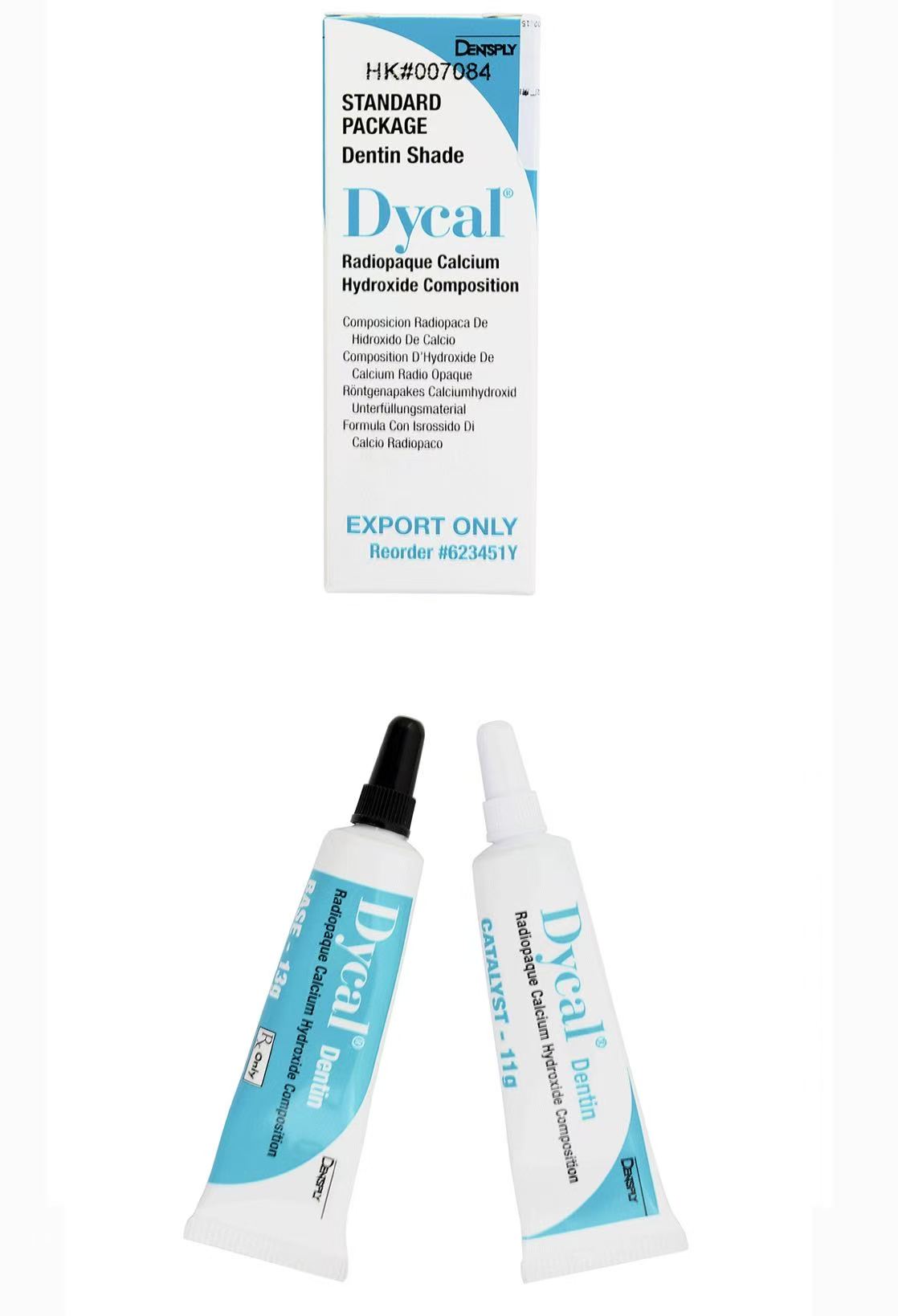
Dentsply Dycal Radiopaque Calcium Hydroxide Composition Dentin Shade
Dentsply Dycal Radiopaque Calcium Hydroxide Composition Dentin Shade
Couldn't load pickup availability
Dycal Calcium Hydroxide Composition - Product Information
Detailed Introduction
Dycal is a rigid, self-setting, radiopaque calcium hydroxide composition. It will not inhibit the polymerization of acrylic and composite restoration materials.
Product Composition
Base: 1,3-Butylene glycol disalicylate, Zinc oxide, Calcium phosphate, Calcium tungstate, Iron oxide pigments.
Catalyst: Calcium hydroxide, N-ethyl-o/p-toluenesulfonamide, Zinc oxide, Titanium dioxide, Zinc stearate, Iron oxide pigments (used as a dentin-shade colorant only).
Intended Use
1. Direct and indirect pulp capping.
2. Used as a protective liner under dental filling materials, cements, and other base materials.
Product Features
1. Stimulates the formation of secondary dentin.
2. Acid-resistant.
3. Low solubility.
Packaging Specifications
1 Tube Base (13g / tube)
1 Tube Catalyst (11g / tube)
1 Mixing Pad
Instructions for Use (Direct Pulp Capping)
1. Under rubber dam isolation, perform cavity preparation using a high-speed bur with water cooling.
2. If carious tissue is present, remove decay using a low-speed round bur or an excavator.
3. Rinse the cavity and the exposed pulp area with a 2.6% - 5% Sodium Hypochlorite (NaOCl) solution. For severe pulpal bleeding, use a cotton pellet.
4. Gently dry the cavity with a cotton pellet. Note: Do not desiccate the dentin (do not over-dry).
5. Dispense equal volumes of the two pastes onto the mixing pad. Replace the tube caps immediately. Rapidly and thoroughly mix the two pastes until a uniform color is achieved. Do not over-mix; the mixing process should be completed within 10 seconds.
Note: Do not attempt to change the working time of Dycal by increasing or decreasing the amount of catalyst.
6. Apply the mixed paste directly to the exposed pulp and/or dentin (where the remaining dentin thickness is less than 1 mm). Do not place Dycal on enamel or the margins of the cavity. Avoid excessive application; a thin layer is sufficient, with an optimal thickness of approximately 0.8 - 1 mm.
7. Wait for the Dycal paste to set completely. At normal room temperature (70°F / 21°C, 50% relative humidity), the setting time on the mixing pad is approximately 2 - 3 minutes. The setting time in the mouth will be shorter due to higher temperature and humidity.
8. Use a sharp excavator or bur to remove any excess hardened material from enamel, cavity margins, or undercut areas.
9. Once the Dycal paste has fully set, proceed with the application of adhesive, base materials, or permanent restorative materials.
(Specific operation methods should refer to the instructions provided by the material manufacturer.)
Share